The initial excitement surrounding generative AI (gen AI) has led many organizations to experiment with pilot projects. However, as the novelty wears off, the challenge of scaling these initiatives becomes apparent. A stark reality is that only a small fraction of companies have successfully integrated gen AI into their operations at scale. To navigate this complex landscape, CIOs must confront several hard truths that can guide their organizations from pilot projects to full-scale implementations.
Here are eight essential truths that CIOs should consider
Focus on Strategic Priorities, Not Just Technology:
The allure of cutting-edge technology can lead organizations to pursue numerous pilot projects without a clear strategic focus. CIOs must prioritize initiatives that align with the organization’s core business objectives. This means evaluating which projects can deliver tangible business value and eliminating those that do not contribute meaningfully to the organization’s goals.
- Assess Business Impact: Evaluate potential use cases based on their ability to drive revenue or reduce costs. This assessment should consider the long-term implications of each project, ensuring that resources are allocated to initiatives with sustainable benefits.
- Streamline Initiatives: Concentrate resources on a few high-impact projects rather than spreading efforts too thinly across many pilots. This approach not only improves focus but also enhances the chances of success by allowing teams to develop deeper expertise in fewer areas.
By focusing on strategic priorities, organizations can ensure that their investments in gen AI yield significant returns, ultimately leading to a more robust and competitive position in the market.
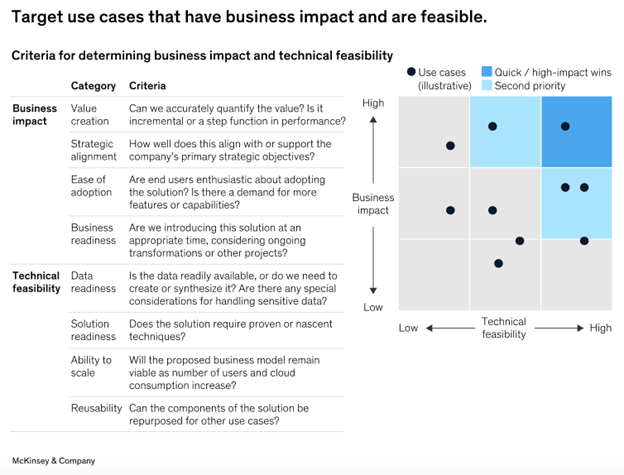
To reinforce the importance of focusing on strategic priorities, the above image outlines a framework for evaluating use cases based on business impact and technical feasibility. It helps CIOs identify projects that offer high-impact wins, aligning with core business objectives. By targeting initiatives that score high on both axes, organizations can maximize their resources and efforts, ensuring that investments in generative AI are both effective and sustainable.
Integration is Key: It’s About the Ecosystem, Not Just Components
Many organizations mistakenly believe that the success of gen AI initiatives hinges solely on the individual components, such as large language models (LLMs) or data sources. However, the real challenge lies in how these components integrate and function as a cohesive system.
- Orchestration Matters: Effective integration requires orchestrating various components, including APIs, databases, and user interfaces, to work seamlessly together. This orchestration is critical for ensuring that data flows smoothly between systems and that models can access the information they need in real-time.
- Consider End-to-End Automation: Automating the entire workflow—from data ingestion to model deployment—can significantly enhance efficiency and reduce errors. By implementing comprehensive automation strategies, organizations can minimize manual intervention, thereby reducing the risk of human error and increasing operational efficiency.
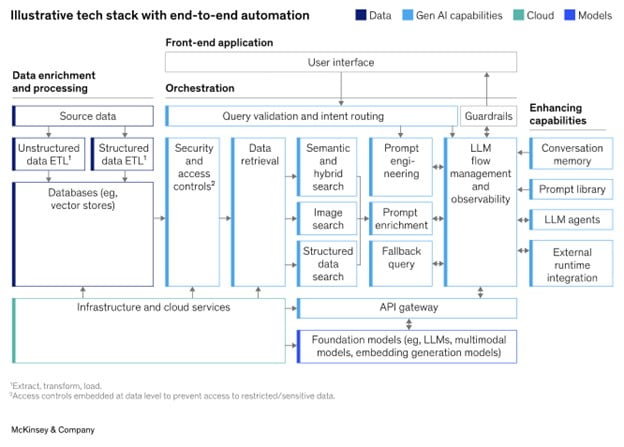
CIOs must prioritize building an integrated ecosystem that supports gen AI applications, ensuring that all parts work together harmoniously and contribute to the overall success of the initiatives.
To illustrate this, the image above demonstrates a tech stack with end-to-end automation for generative AI. It highlights the seamless integration of data processing, orchestration, and enhancement capabilities, where each component—ranging from data enrichment to real-time observability—works in unison. The API gateway serves as the core orchestration engine, ensuring secure, efficient, and compliant operations, while MLOps platforms enable automated workflows, driving faster and more reliable AI deployments.
Understand and Manage Costs Proactively
As organizations scale their gen AI efforts, costs can escalate rapidly if not managed effectively. It’s crucial for CIOs to understand the cost structure associated with gen AI applications.
- Identify Cost Drivers: Recognize that model development is only a fraction of the total cost. Change management, operational maintenance, and compliance can significantly impact the budget. Understanding these cost drivers allows organizations to allocate resources more effectively and avoid unexpected financial burdens.
- Implement Cost Control Measures: Establish frameworks to monitor and control costs, ensuring that spending aligns with the anticipated ROI. Regularly reviewing expenditures and comparing them against performance metrics can help identify areas where costs can be reduced without sacrificing quality.
By proactively managing costs, organizations can avoid financial pitfalls and ensure sustainable growth in their gen AI initiatives, ultimately leading to a more efficient allocation of resources.
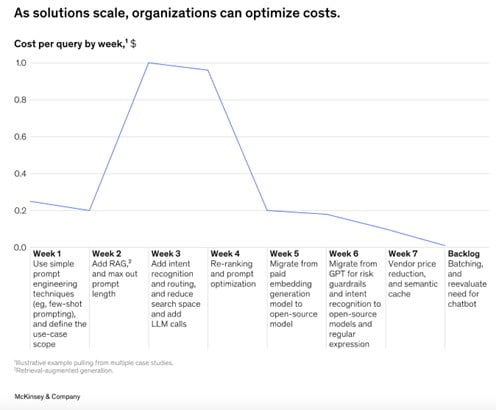
To complement the third point on cost management, the accompanying image illustrates how organizations can optimize costs as they scale their gen AI solutions. The graph shows a progressive decrease in cost per query over time, highlighting the impact of strategic decisions and cost-reduction tools, such as preloading embeddings and migrating to open-source models.
Simplify the Technology Stack
The proliferation of tools and platforms can complicate the scaling of gen AI initiatives. CIOs should aim to streamline their technology stack to enhance operational efficiency.
- Reduce Redundancies: Identify overlapping tools and eliminate those that do not add significant value. This reduction not only simplifies the technology landscape but also frees up resources that can be redirected toward more impactful projects.
- Standardize Platforms: Adopt a unified platform for gen AI development and deployment to minimize complexity and improve collaboration across teams. A standardized approach can facilitate better communication and knowledge sharing, ultimately leading to more successful project outcomes.
A simplified technology stack can lead to faster deployment times and lower operational costs, enabling organizations to scale their gen AI initiatives more effectively.
Build Cross-Functional Teams for Value Creation
Scaling gen AI requires diverse skill sets that extend beyond technical expertise. CIOs should focus on assembling cross-functional teams that can drive value creation.
- Encourage Collaboration: Foster collaboration between data scientists, business analysts, and domain experts to ensure that gen AI solutions address real business challenges. This collaboration can lead to more innovative solutions that are better aligned with organizational needs.
- Invest in Training: Provide ongoing training and development opportunities to equip team members with the skills necessary to leverage gen AI effectively. By investing in employee development, organizations can build a more capable workforce that is better prepared to tackle the complexities of gen AI.
By building teams that can bridge the gap between technology and business, organizations can enhance the value generated from their gen AI initiatives, ultimately leading to improved business outcomes.
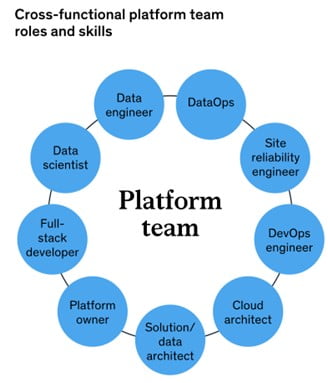
To reinforce the importance of building cross-functional teams, the accompanying image illustrates the diverse roles necessary for a successful gen AI platform team. It showcases how key positions such as DataOps, DevOps engineers, site reliability engineers, data scientists, and cloud architects collaborate to create value. Each role brings a unique set of skills, emphasizing the need for a well-rounded team that can bridge the gap between technology and business objectives, ensuring the successful scaling of gen AI initiatives.
Prioritize Quality Data Over Perfect Data
Data quality is paramount for the success of gen AI applications. However, organizations often fall into the trap of seeking perfect data, which can delay progress.
- Focus on Relevant Data: Identify the most critical data sources that will drive value for specific use cases and prioritize their management. By concentrating on the data that matters most, organizations can streamline their efforts and achieve quicker results.
- Adopt an Iterative Approach: Implement a continuous improvement process for data quality, allowing teams to refine their data management practices over time. This iterative approach enables organizations to adapt to changing requirements and ensure that their data remains relevant and useful.
By prioritizing quality data, organizations can accelerate their gen AI initiatives and improve the accuracy of their models, ultimately leading to better decision-making and more effective solutions.
Foster a Culture of Reusability
One of the most effective ways to scale gen AI initiatives is by fostering a culture of reusability within the organization.
- Encourage Code Reuse: Develop libraries of reusable code and components that can be leveraged across different projects, reducing duplication of effort. This practice not only speeds up development but also ensures consistency across various applications.
- Document Best Practices: Create a repository of best practices and lessons learned from previous projects to inform future initiatives. By documenting successes and challenges, organizations can build a knowledge base that supports continuous improvement.
By promoting reusability, organizations can streamline development processes and enhance the speed at which they can deploy new gen AI applications, ultimately leading to greater efficiency and effectiveness.
Embrace Continuous Learning and Adaptation
The landscape of gen AI is rapidly evolving, and organizations must be prepared to adapt to new developments and insights.
- Implement Feedback Loops: Establish mechanisms for gathering feedback from users and stakeholders to inform ongoing improvements to gen AI applications. This feedback can provide valuable insights into user needs and preferences, helping to shape future developments.
- Stay Informed: Keep abreast of the latest advancements in gen AI technology and methodologies to ensure that the organization remains competitive. By actively monitoring industry trends and innovations, organizations can identify opportunities for improvement and stay ahead of the curve.
By embracing a mindset of continuous learning and adaptation, CIOs can position their organizations for long-term success in the gen AI arena, ensuring that they remain agile and responsive to changing market conditions.
Conclusion
The journey from pilot to scale in generative AI is fraught with challenges, but by confronting these eight hard truths, CIOs can navigate the complexities of implementation more effectively. By focusing on strategic priorities, ensuring integration, managing costs, simplifying technology stacks, building cross-functional teams, prioritizing data quality, fostering reusability, and embracing continuous learning, organizations can unlock the full potential of generative AI. As the honeymoon phase fades, the real work begins—transforming the promise of gen AI into tangible business value.
References:
About Digital Alpha
Digital Alpha partners with RIAs, broker-dealers, and wealth management firms to design and implement technology strategies that drive operational efficiency and enable growth. Our integration-first methodology grounded in the 2025 Kitces research ensures that AI and automation investments deliver measurable results. Programs available for firms from $500M to $20B+ AUM, with production-ready implementations in 30–90 days.
Learn more: digital-alpha.com/capital-markets